

Why Firearms Safety Training Is Your First Line of Defense
Firearms safety courses are mandatory training programs that teach proper handling, storage, and use of firearms to prevent accidents and ensure legal compliance. In Canada, over 300,000 people take the Canadian Firearms Safety Course (CFSC) annually, while in the U.S., states like Texas, Florida, and Arizona have adopted standardized training through programs like IHEA-USA Firearm Fundamentals.
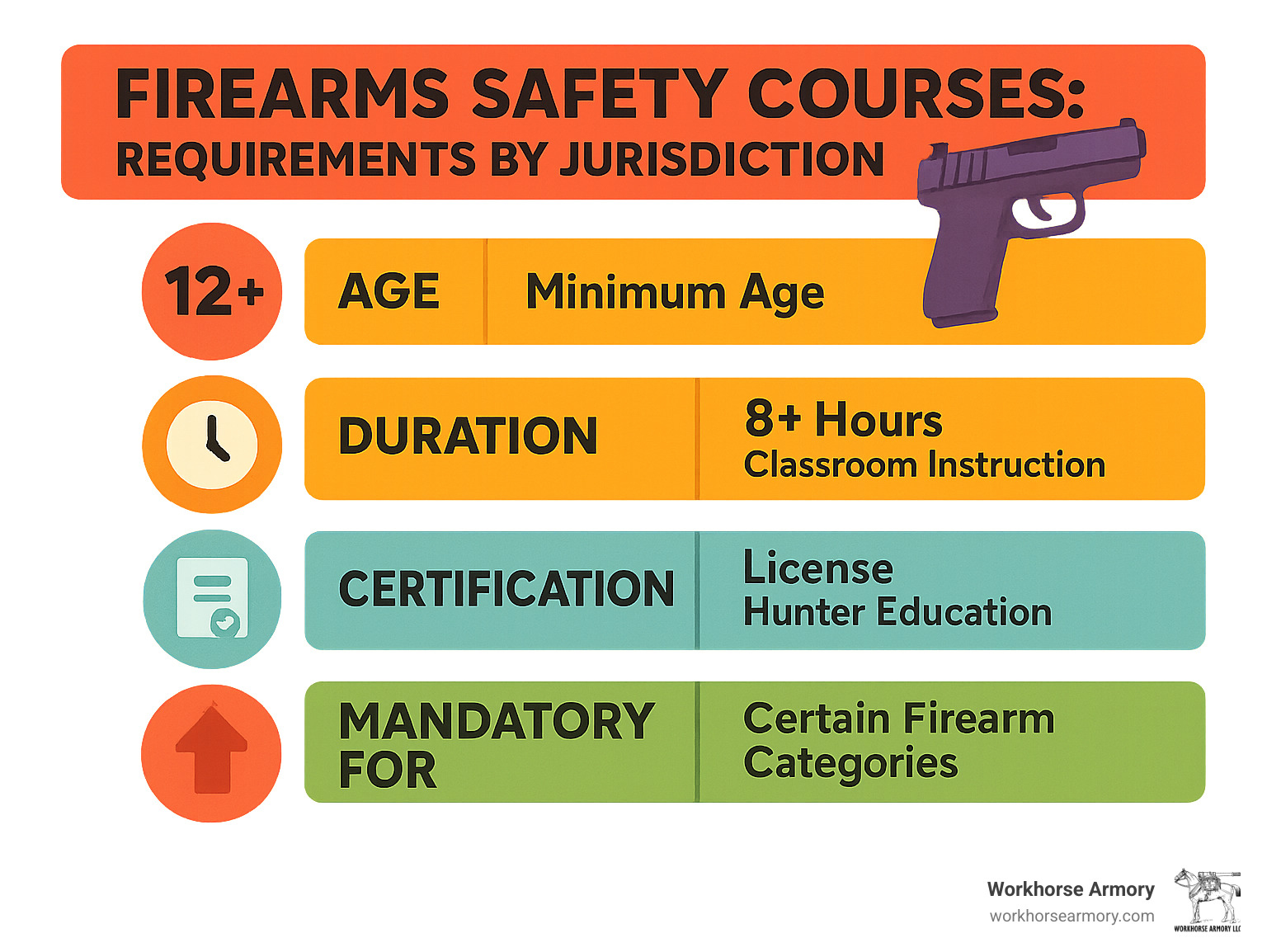
Key Requirements at a Glance:
- Age: 12+ years old (minors need parental consent)
- Duration: 8+ hours classroom instruction plus exams
- Cost: $47-$134 depending on course type and location
- Mandatory for: First-time license applicants, hunters, concealed carry permits
- Formats: In-person classroom, online modules, or combined approaches
Whether you’re a first-time gun owner in Albuquerque or an experienced shooter looking to expand your knowledge, proper training isn’t just recommended – it’s often legally required. The Canadian system mandates safety courses for all Possession and Acquisition License (PAL) applicants, while many U.S. states require hunter education or concealed carry training.
Gun ownership comes with serious responsibility. As one industry expert puts it: “Gun ownership doesn’t stop at buying a gun… that right also comes with the responsibility of knowing how to use it.” With 4.6 million American children having access to unsecured firearms and nearly 380,000 guns stolen annually, proper training becomes a community safety issue.
I’m Mike Ruane, general manager of Workhorse Armory and a retired paramedic/firefighter who has witnessed both the successes and failures of firearm use in emergency situations. My experience in the firearms industry since 2015, combined with my first responder background, has shown me why firearms safety courses are absolutely critical for responsible ownership.
Why Firearm Safety Training Is Non-Negotiable
Here’s the hard truth: approximately 350 accidental shootings by youth happen every year in the United States. As someone who’s responded to emergency calls as a paramedic, I can tell you that many of these tragedies could have been prevented with proper training and safe storage practices.
Accident prevention is the most obvious benefit, but it goes deeper than that. Scientific research on firearm injury reduction shows that comprehensive safety training doesn’t just reduce accidents – it improves decision-making under pressure and builds the muscle memory that kicks in when it matters most.
Legal compliance is another reality we can’t ignore. In Canada, you simply cannot get your firearms license without completing the CFSC first. Many U.S. states have similar requirements for hunting licenses or concealed carry permits.
Confidence building transforms nervous first-time gun owners into safe, competent handlers. I’ve watched countless students walk into our training sessions unsure of themselves. By the end, they’re handling firearms safely and confidently.
The Ripple Effect of Proper Training
When people complete comprehensive firearms safety courses, they become teachers themselves. Not formally, but in their daily lives. They’re the ones who gently correct unsafe handling at the range or who share proper storage tips with friends.
Family protection takes on new meaning when parents understand both the power and responsibility of firearm ownership. Parents who complete safety courses are far more likely to invest in proper storage solutions and have honest, age-appropriate conversations with their children about firearm safety.
Who Must Take a Course? Age, Eligibility & Legal Mandates
The question of who needs firearms safety courses depends on where you live and what you plan to do with your firearm. Understanding the rules upfront saves a lot of headaches later.
In Canada, anyone 12 years or older can take the Canadian Firearms Safety Course (CFSC). Minors between 12 and 17 who pass can only apply for a Minor’s License, which allows them to borrow and use non-restricted firearms under supervision – they can’t actually own firearms until they’re 18.
First-time license applicants must complete the CFSC for non-restricted firearms like rifles and shotguns. If you want to own handguns or other restricted firearms, you’ll also need the Canadian Restricted Firearms Safety Course (CRFSC). The Chief Firearms Officer in each province oversees this process.
In the United States, requirements vary dramatically from state to state. Some states mandate hunter education courses for hunting licenses, while others require specific training for concealed carry permits.
If you’re just getting started, our first time gun owner tips can help you sort through what applies to your specific situation.
Firearms Safety Courses Across Borders: Canada vs USA
Canada’s centralized system ensures consistent training whether you’re in British Columbia or Nova Scotia. The U.S. system’s state-by-state approach means training requirements can vary wildly. The IHEA-USA Firearm Fundamentals course is gaining ground as a standardized option, adopted by at least 11 state agencies for just $12 with unlimited exam attempts.
Quebec presents a complex example with its dual-course requirement. Hunters there must complete both the CFSC classroom course ($108 for 8-10 hours) and the Introduction to Hunting with Firearms online course ($47.28 for about 5 hours), plus the Bill 9 competency test for shooting club members.
Special Cases & Exemptions
Military personnel and peace officers often get exemptions based on their professional training. Some veterans can use their military experience to qualify for exemptions, particularly if they’ve left service within the last 20 years.
Court-ordered prohibitions create a different situation entirely. If you’re under a firearms prohibition order, you can’t take courses during the prohibition period, and any courses completed during this time won’t count.
Types of Firearms Safety Courses – The Core of firearms safety courses
When it comes to firearms safety courses, you’ll find several distinct types designed for different purposes and firearm categories. Think of it like getting a driver’s license – you need different training for motorcycles versus commercial trucks. The same principle applies to firearms training.
The Canadian Firearms Safety Course (CFSC) serves as the foundation for all Canadian firearms training. This comprehensive 8-hour course covers everything from the evolution of firearms and their major parts to safe storage and transportation. You’ll learn about different types of firearms and their actions, ammunition fundamentals, proper handling techniques, and most importantly, your responsibilities as a firearms owner.
For those interested in handguns and other restricted firearms, the Canadian Restricted Firearms Safety Course (CRFSC) builds on the CFSC foundation. This additional 6-8 hour course dives deep into handgun-specific topics like operating different handgun actions, specialized firing techniques, and the unique storage and transportation requirements for restricted firearms.
Many students find the combined course option most practical. Rather than taking two separate courses, you can complete both non-restricted and restricted training over two intensive days. This approach often saves both time and money while providing comprehensive coverage of all firearm types.
The online course format has gained popularity, especially in the United States. Programs like the IHEA-USA Firearm Fundamentals can be completed in just a few hours for around $12, with unlimited exam attempts. While convenient, these courses work best when combined with hands-on practice.
Blended learning approaches offer the best of both worlds – online theory components paired with in-person practical training. This format allows students to learn at their own pace while ensuring they get essential hands-on experience with actual firearms.
| Course Type | Duration | Cost Range | Prerequisites | Covers |
|---|---|---|---|---|
| CFSC | 8-10 hours | $108 | Age 12+, Photo ID | Non-restricted firearms |
| CRFSC | 6-8 hours | $134 | CFSC completion | Restricted firearms |
| Combined | 2 days | $200-250 | Age 12+, Photo ID | Both non-restricted and restricted |
| Online (US) | 2-5 hours | $12-50 | Varies by state | Basic fundamentals |
Choosing the Right Firearms Safety Courses for Your Goals
Your intended use should drive your choice of firearms safety courses. Hunters typically need non-restricted training – the CFSC in Canada or hunter education courses in the United States. These courses focus on rifles and shotguns, covering field safety, game laws, and ethical hunting practices.
Sport shooters interested in handgun competition need restricted training. The CRFSC opens doors to target shooting, IPSC competition, and other handgun sports. Many shooting clubs actually require this certification before allowing members to use their facilities.
Concealed carry applicants face state-specific requirements that can be quite demanding. Some states require 15-hour initial courses with ongoing refresher training every two years and full renewal every four years. Military members often qualify for condensed courses that focus on civilian legal considerations while meeting all statutory requirements.
Collector licensing typically requires the most comprehensive training since collectors often own both non-restricted and restricted firearms. The investment in combined courses usually pays off through reduced total training time and significant cost savings compared to taking separate courses.
Course Costs, Duration & What to Bring
Firearms safety courses represent a meaningful investment in your knowledge and safety, but the costs remain reasonable considering the comprehensive training you receive. Canadian courses range from $47.28 for online components up to $134 for restricted training, with most including your manual and examination fees.
The 8-hour minimum requirement for Canadian courses isn’t arbitrary – it reflects the comprehensive nature of proper firearms training. This doesn’t include examination time, so plan for a full day commitment. Scientific research on adult learning retention actually supports this duration as optimal for both skill acquisition and long-term retention.
Valid photo identification tops the list of essential items to bring. Your course manual is often available for pickup before class, though some providers include it in your course fee. Don’t forget a notebook and writing materials – you’ll want to take notes during the instruction.
Comfortable clothing suitable for practical exercises is important, especially if your course includes hands-on components. Some courses require you to demonstrate safe handling techniques, so avoid restrictive clothing that might interfere with proper firearm handling.
Most providers accept cash and credit cards, with some offering online payment systems for added convenience. Package deals for combined courses or group discounts for families are often available – it never hurts to ask when you’re registering.
Inside the Classroom: What You’ll Learn & How You’ll Be Tested
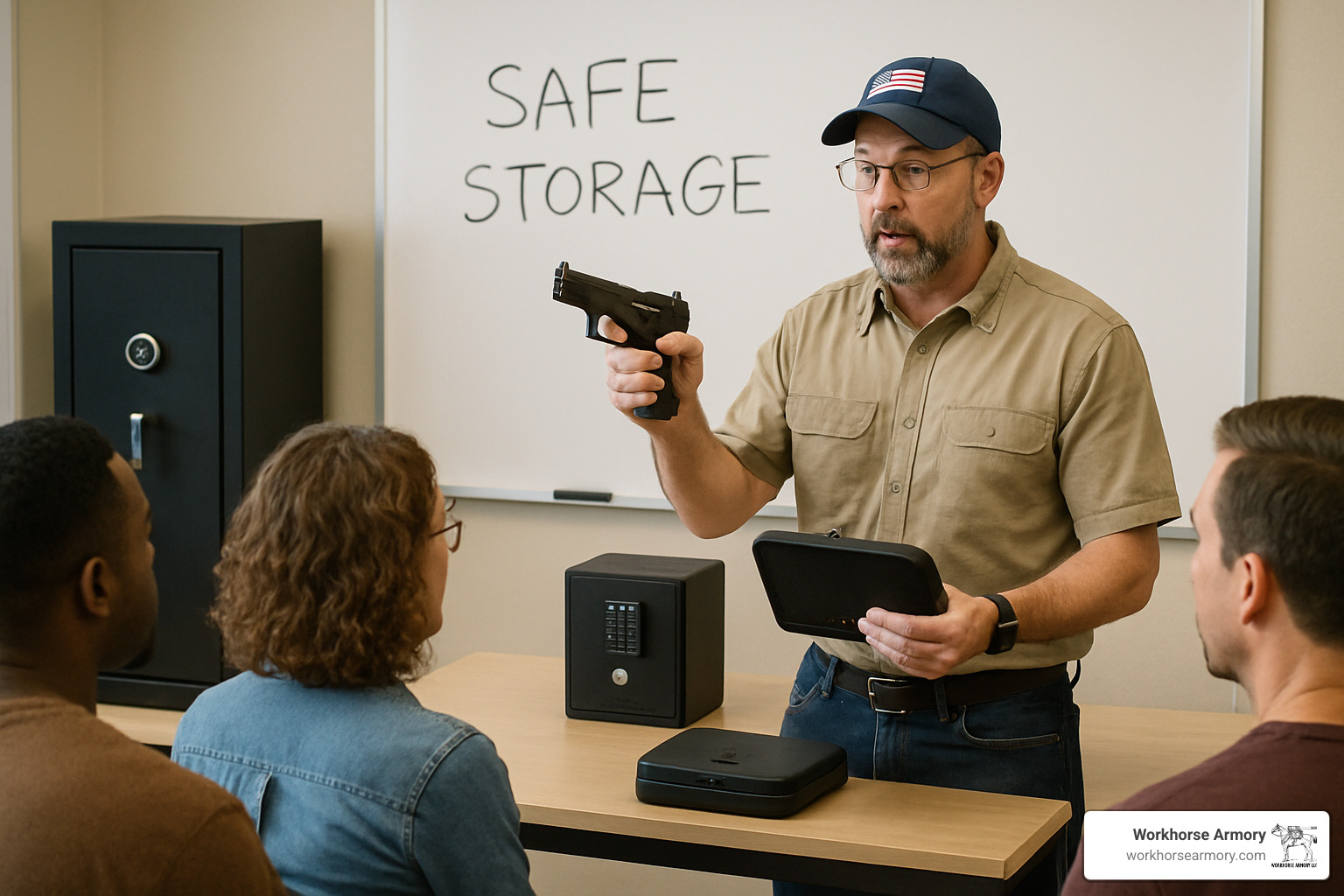
Walking into your first firearms safety course can feel intimidating, but instructors design these programs to be welcoming and educational. The classroom atmosphere is typically relaxed yet focused.
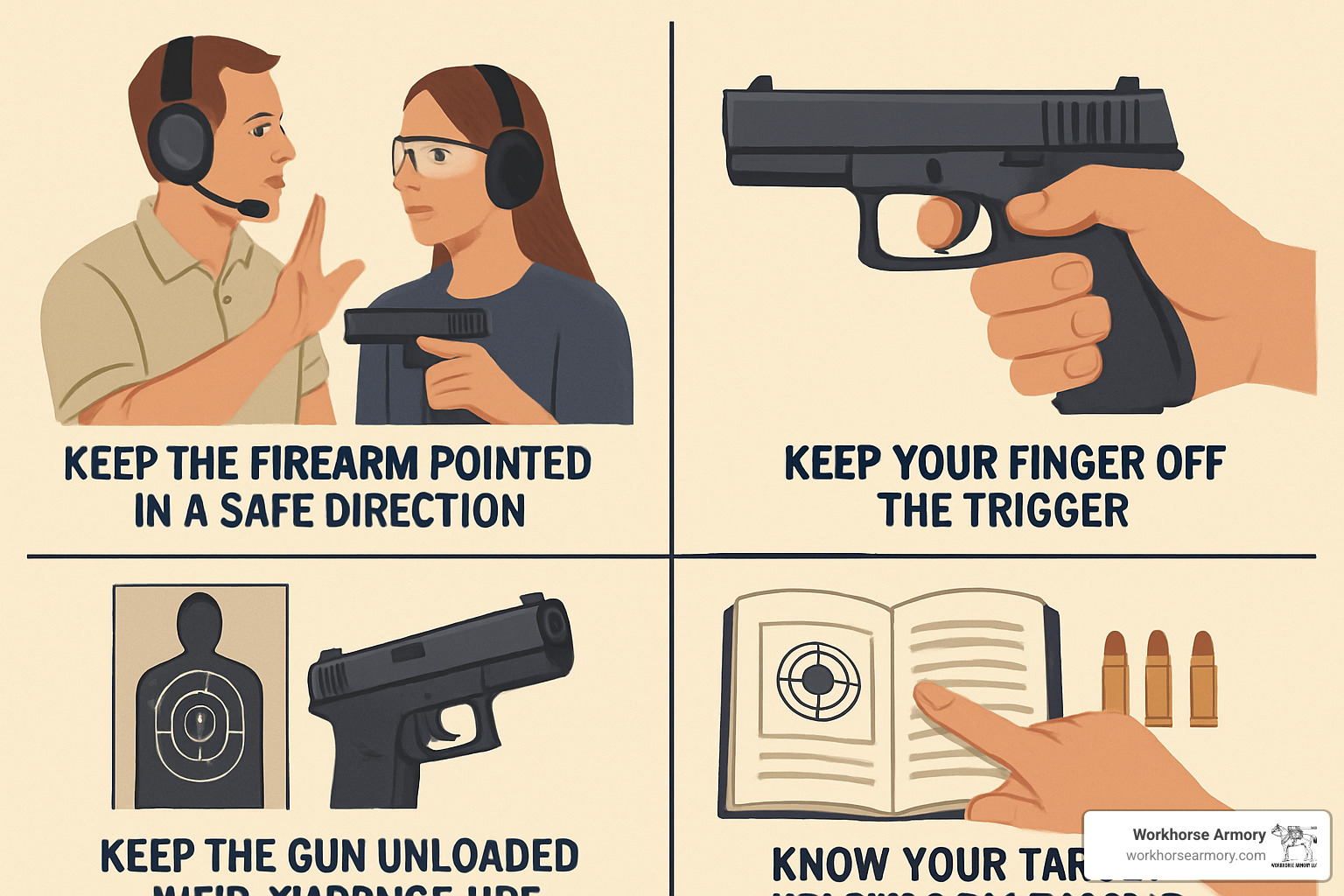
The foundation centers on safe handling procedures – life-saving habits that become second nature. You’ll learn to treat every firearm as if it’s loaded, never point a firearm at anything you don’t intend to destroy, keep your finger off the trigger until ready to shoot, and be sure of your target and what’s beyond it.
Ammunition basics often surprise new students with their complexity. Different cartridge types serve specific purposes, and understanding these differences prevents dangerous mismatches. You’ll learn proper storage methods that keep ammunition dry and accessible while preventing deterioration.
Storage and transport requirements vary between jurisdictions, but principles remain consistent. Secure storage protects unauthorized users, especially children, while proper transport procedures keep you legal during travel.
Range etiquette creates the respectful, safe environment that makes shooting enjoyable. You’ll learn standard range commands, understand why proper hearing and eye protection isn’t optional, and master procedures for handling malfunctions safely.
Testing combines written and practical components. The written exam tests theoretical knowledge – laws, safety principles, and technical information. The practical exam requires demonstrating safe handling with disabled training firearms.
Pass rates are generally high for students who attend classes and engage with the material. Retest policies provide second chances when needed, typically within 30 to 90 days.
Study Resources & How to Ace the Exam
Success starts before you walk into the classroom. Most courses provide comprehensive student manuals – we strongly recommend pre-reading the material.
Mock quizzes and practice tests help identify knowledge gaps before the real exam. Minor accommodations ensure everyone can successfully complete training regardless of special needs.
The real secret to success is treating the course seriously and participating actively. Students who engage with the material, ask questions, and practice demonstrated techniques consistently achieve better outcomes.
From Certificate to Carry: Next Steps After Passing
Congratulations! You’ve passed your firearms safety courses and earned your certificate – but this is really just the starting line. The journey from classroom to legal ownership involves several important steps that require patience and attention to detail.
In Canada, your certificate opens up the ability to apply for a Possession and Acquisition License (PAL) through the RCMP. This comprehensive process includes thorough background checks, reference interviews, and waiting periods that can stretch from 45 to 90 days.
If you completed the Canadian Restricted Firearms Safety Course, you can apply for a Restricted PAL (RPAL). This opens the door to handgun ownership, but comes with additional requirements like range membership.
The background check process is thorough by design. Investigators will contact your listed references, verify your personal history, and examine criminal and mental health records. Make sure your references know they might be contacted.
Wait times vary depending on location and current processing volumes. Canadian applications can take six weeks to several months, while U.S. concealed carry permits typically process within 2-8 weeks. Start early, especially if you’re planning for hunting season.
For those pursuing restricted firearms in Canada, club membership often becomes necessary. Quebec residents face the additional requirement of passing the Bill 9 test before joining shooting clubs.
Ready to take the next step? You can register now for available courses in your area.
Maintaining Your Responsibilities Post-Certification
Getting your license is like getting your driver’s license – the real learning happens after you pass the test. Responsible ownership is an ongoing commitment.
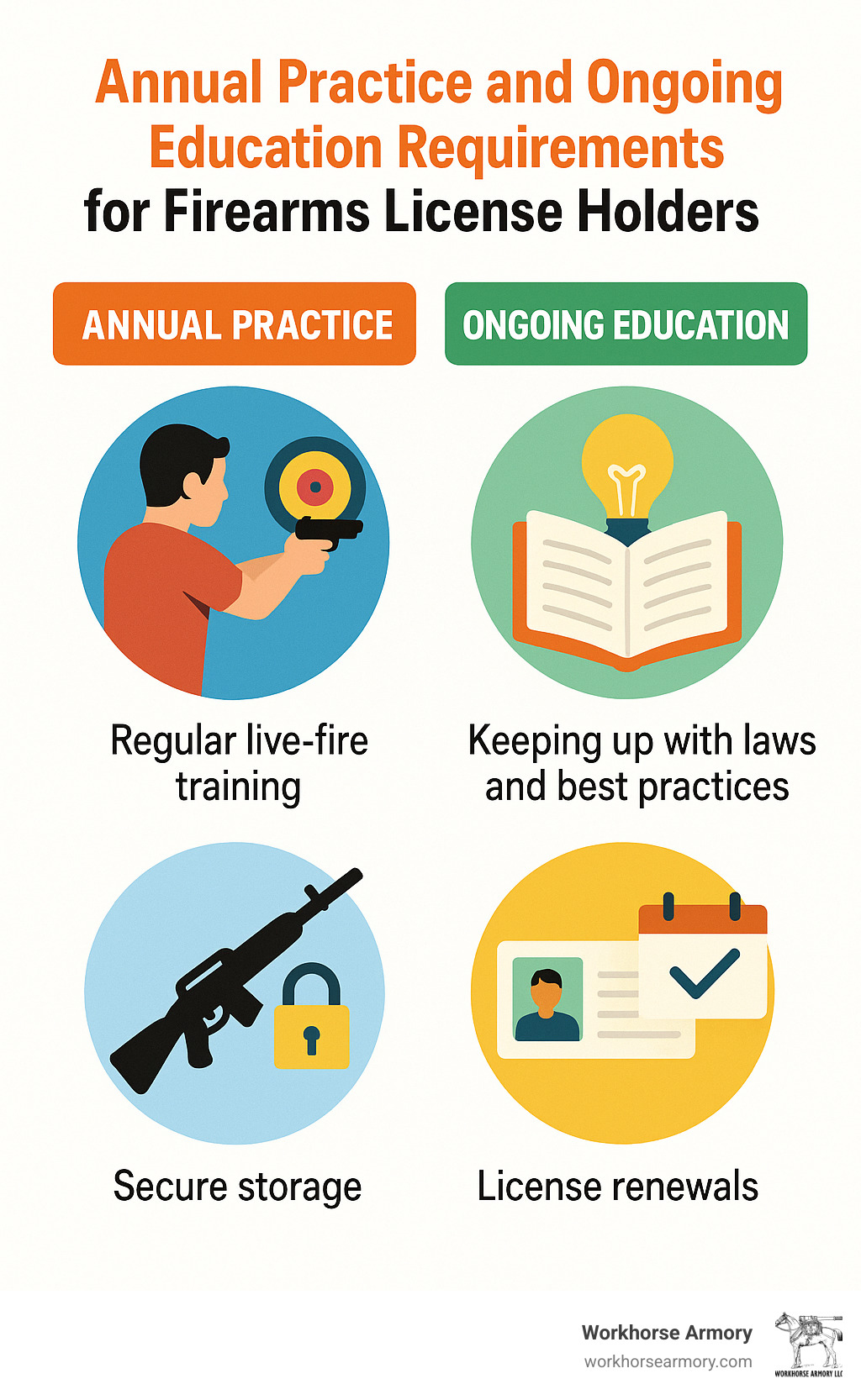
Annual practice isn’t just recommended – it’s essential for maintaining skills and confidence. Just like any other skill, safe firearm handling deteriorates without regular use.
Secure storage becomes a daily habit. Every time you return from the range, every time you clean your firearms – you’re applying storage principles learned in your safety course.
License renewals sneak up faster than expected. Canadian licenses require renewal every five years, while some U.S. states mandate periodic renewal with refresher training. Mark these dates in your calendar now.
Transportation permits may be required for certain activities, especially in Canada’s restricted firearms world. Understanding when you need these permits prevents legal complications.
At Workhorse Armory, we support our customers throughout their entire ownership journey. Check out our full range of services to see how we can support your continued growth as a responsible firearms owner.
Becoming an Instructor & Advanced Pathways
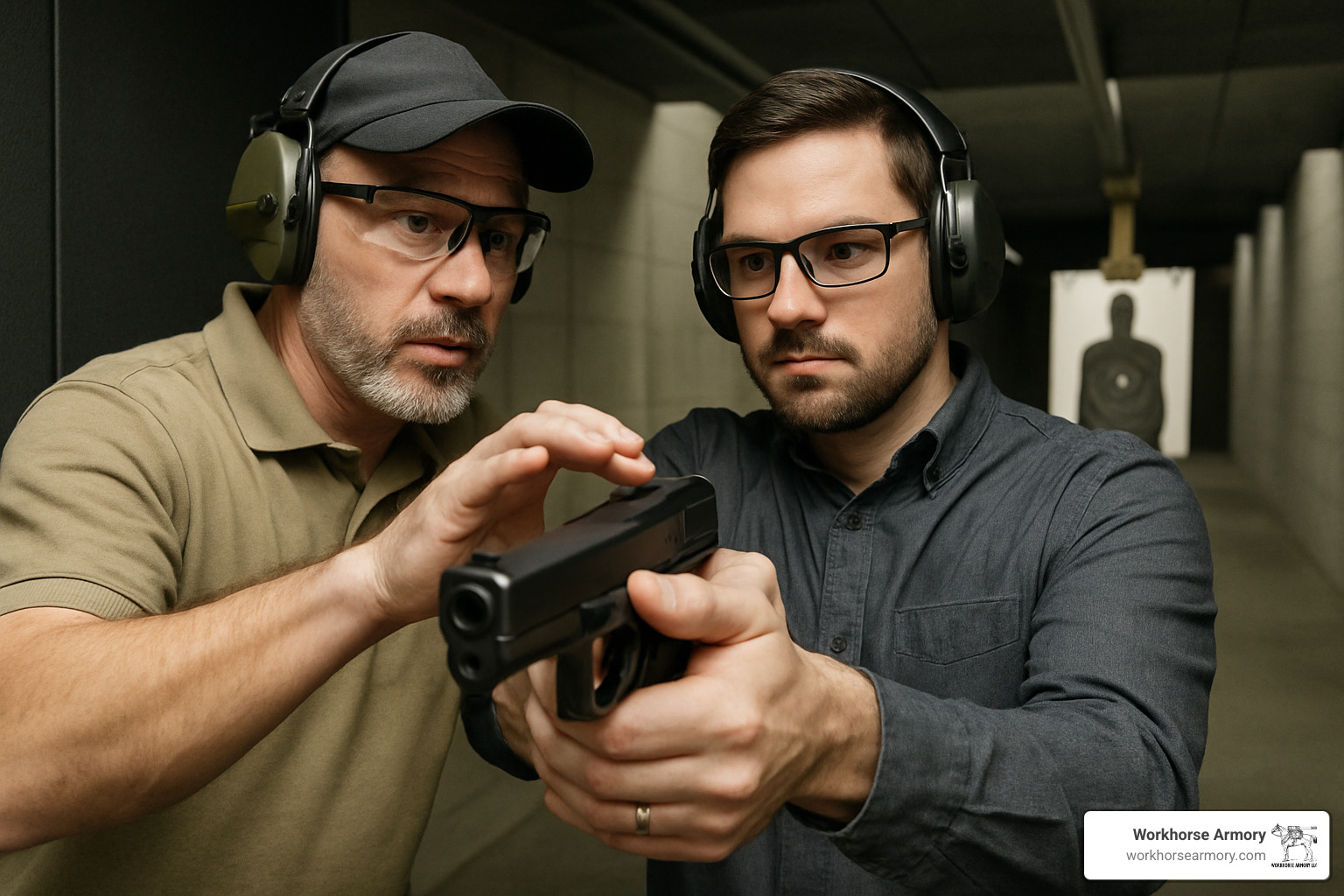
Teaching firearms safety courses isn’t just a career move – it’s a calling to help build a safer, more responsible firearms community. After years of watching students transform from nervous beginners into confident, safety-minded owners, there’s nothing quite like knowing you’ve helped prevent accidents and save lives.
The path to becoming an instructor starts with meeting specific instructor criteria. You’ll need extensive firearms experience, a clean background, and demonstrated proficiency in both handling firearms and teaching others. In Canada, prospective instructors must contact their Chief Firearms Officer to learn about eligibility requirements.
The apprenticeship phase is where real learning happens. You’ll work alongside experienced instructors, observing their teaching methods and gradually taking on more responsibility.
Certification renewal keeps instructors sharp and current. Laws change, equipment evolves, and teaching methods improve – staying current ensures your students receive the most accurate, up-to-date training possible.
Career opportunities for qualified instructors continue to grow. From teaching at established training centers to developing specialized corporate programs, there’s steady demand for effective firearms safety instruction.
Giving Back: Mentoring the Next Generation
Youth camps provide opportunities to teach basic safety principles to young people, helping them understand proper responses if they encounter unsecured firearms.
Community outreach extends your impact beyond paying students. Speaking at schools, community centers, or outdoor events helps spread safety awareness to people who might never take a formal course.
Safe-storage advocacy becomes a natural extension of instruction work. When you’ve seen how proper storage prevents tragedies, you become a passionate advocate for secure storage practices.
Frequently Asked Questions about firearms safety courses
Getting ready to take your first firearms safety courses can feel overwhelming. Let me address the most common concerns that keep people up at night before their training day.
What happens if I fail the written or practical test?
Take a deep breath – failing your first attempt isn’t the end of the world, and it happens more often than you might think. Most firearms safety courses give you a second chance, typically within 30 to 90 days of your initial attempt.
The financial impact varies by provider. Some instructors include one retest in your original course fee, while others charge additional fees that usually range from $25 to $50. Online courses often offer unlimited attempts.
Most instructors are genuinely invested in your success and will sit down with you to identify specific knowledge gaps. They might recommend additional study resources or offer extra guidance on practical handling techniques.
How long does it take to receive my certificate and PAL?
This is probably our most frequently asked question, especially from hunters with upcoming seasons. The timeline has two distinct phases.
Your course certificate typically arrives within 2 to 3 weeks after completing your training. Many providers now email PDF certificates for faster processing.
The PAL application process is completely separate and significantly longer. In Canada, expect 45 to 90 days from the time you submit your application to receiving your actual license.
I always recommend starting your firearms safety courses at least four months before you actually need your license.
Are online courses accepted everywhere?
This question gets tricky because the answer depends entirely on where you live and what you plan to do with your training.
In Canada, the CFSC and CRFSC generally require classroom instruction with hands-on practical training. You simply can’t get around the in-person requirement for Canadian licensing.
U.S. states present a patchwork of different requirements. Some states readily accept online hunter education courses, while others insist on in-person instruction. The IHEA-USA Firearm Fundamentals course has gained acceptance in at least 11 states.
Here’s my advice: always verify course acceptance with your relevant licensing authority before enrolling. A quick phone call can save you time, money, and frustration down the road.
Conclusion
Taking firearms safety courses is about so much more than just checking a box for your license application. It’s about joining a community of responsible owners who understand that with great power comes great responsibility. And honestly? It’s one of the best investments you’ll ever make in your safety and the safety of those around you.
Here at Workhorse Armory, we’ve seen thousands of students walk through our doors – some nervous first-timers, others experienced shooters looking to brush up on their skills. What they all have in common is a commitment to doing things the right way. That’s exactly the kind of community we’re proud to be part of.
Our team gets it because we’ve been there. As a veteran- and first responder-founded business, we understand the weight of responsibility that comes with firearms ownership. We’ve seen what happens when training is taken seriously, and unfortunately, what can happen when it’s not. That’s why we’re so passionate about supporting proper education and ongoing skill development.
The learning never really stops. Your safety course certificate isn’t a finish line – it’s more like a learner’s permit. The real education happens through practice, continued learning, and staying connected with knowledgeable people who can help you grow as a responsible owner.
That’s where our unique approach really shines. Between our expert staff, our shooting simulator for year-round practice, and yes, even our onsite bistro where you can grab a coffee and chat with fellow enthusiasts, we’ve created a space where learning feels natural and enjoyable. It’s not just about selling you gear – it’s about building relationships that support your entire ownership journey.
Whether you need help choosing the right storage solution, want to practice your technique in our simulator, or simply have questions about transport regulations, we’re here for the long haul. Our services reflect our commitment to supporting you beyond that initial purchase.
The best firearms safety courses are the ones that stick with you, that change how you think about handling firearms forever. But the best firearm stores? Those are the ones that help you apply what you’ve learned, day after day, year after year. We’re proud to be that kind of partner for the Albuquerque shooting community.
